 (559) 436-0850
 Call Us Now
 Email Us Now





Every day on California roads, drivers make split-second decisions that can change lives in an instant. One of the most preventable causes of serious crashes is also one of the most common: distracted driving. If you or someone you love has been hurt in a collision and you are wondering whether distraction played a role, understanding how California law defines these accidents is an important first step. Distracted driving covers a broad range of behaviors, and knowing what qualifies can directly affect your ability to recover compensation.
How California Defines Distracted Driving
Under California law, distracted driving refers to any activity that diverts a driver’s attention away from the primary task of operating a vehicle. Regulators and courts generally organize these distractions into three categories:
- Visual distractions involve taking your eyes off the road. Glancing at a GPS screen, looking at a roadside billboard, or turning to speak with a passenger all fall into this category.
- Manual distractions involve removing one or both hands from the wheel. Eating, adjusting the radio, reaching for an item in the back seat, or handling a phone are common examples.
- Cognitive distractions involve shifting mental focus away from driving. Daydreaming, emotional stress, or being engrossed in a hands-free phone conversation can all impair a driver’s ability to respond to changing road conditions, even when their eyes are technically on the road and the driver believes they are paying attention.
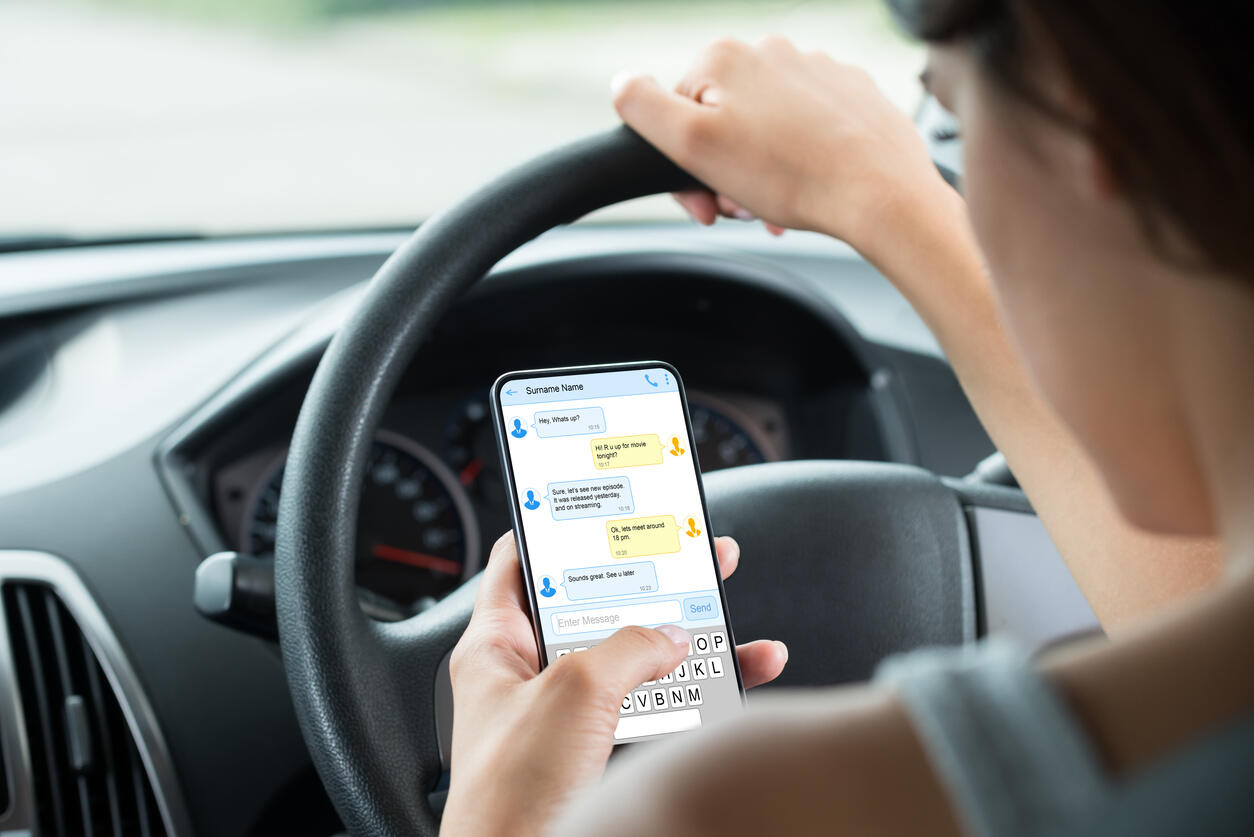
Many of the most dangerous distractions combine all three. Texting while driving, for example, simultaneously diverts a driver’s eyes, hands, and mind.
What California Law Says About Phones and Handheld Devices
California has some of the strictest handheld device laws in the country. Under California Vehicle Code § 23123, drivers are prohibited from using a handheld wireless telephone while operating a motor vehicle. A separate provision, Vehicle Code § 23123.5, prohibits writing, sending, or reading text-based communication on a handheld device while driving.
Drivers over 18 are permitted to use a phone in a hands-free, voice-operated, or mounted configuration, but even hands-free use can constitute cognitive distraction in a legal negligence analysis. If a distracted driver caused your accident, the specific device activity they were engaged in at the time of the collision can be a significant factor in your case.
What Counts as Evidence of Distraction?
Proving that another driver was distracted at the time of a crash requires gathering the right evidence. Common sources include:
- Phone records: Subpoenaed call and text logs can show whether the at-fault driver was actively using their phone at the moment of impact.
- Witness statements: Bystanders or other drivers who saw the at-fault driver looking down, eating, or otherwise not paying attention can provide valuable testimony.
- Surveillance or dashcam footage: Video from nearby businesses, traffic cameras, or a vehicle’s own dashcam can capture the moments before a crash.
- Accident reconstruction: In serious collisions, investigators analyze skid marks, point of impact, and vehicle damage to establish what the driver was doing at the time.
- Social media and app data: In some cases, app activity, including GPS, messaging, or streaming, can be obtained through discovery to establish a driver’s behavior.
This kind of evidence is time-sensitive. Data on phones can be overwritten, witnesses’ memories fade, and surveillance footage may be recorded over quickly. Pursuing legal action promptly helps preserve the information that may be most critical to your claim.
Types of Accidents Commonly Linked to Distracted Driving
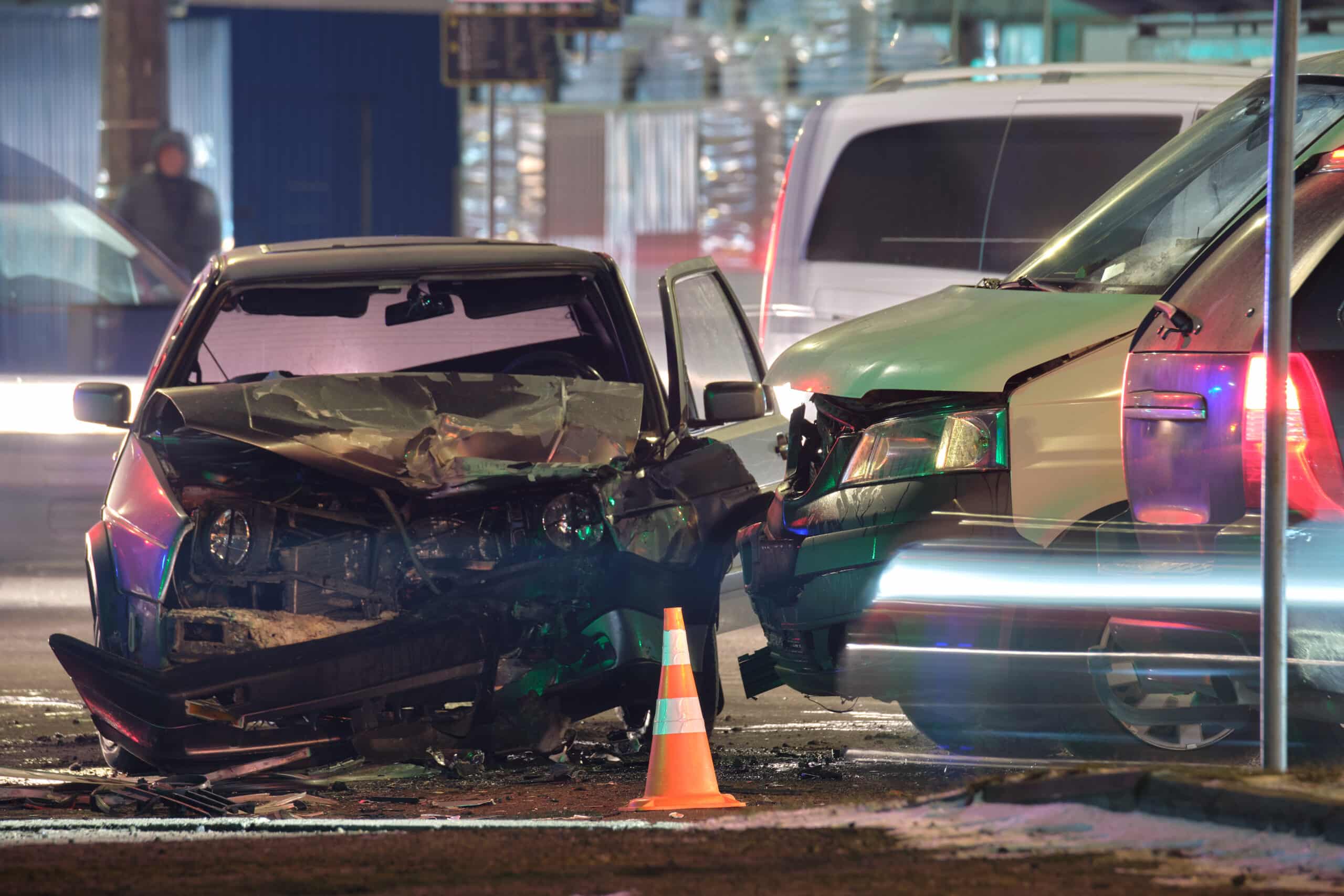
Distracted driving contributes to a wide range of collision types. Rear-end accidents are among the most frequent, often occurring when a driver fails to notice slowing or stopped traffic ahead. Intersection crashes happen when a distracted driver runs a red light or fails to yield. Pedestrian and bicycle accidents are particularly serious, as a driver who is not fully focused may not see a person crossing the street or riding in a bike lane until it is too late.
Rear-end collision claims and pedestrian accident cases both frequently involve distracted driving as an underlying cause, even when it is not immediately obvious from the crash report.
How Fault and Compensation Work in These Cases
California follows a pure comparative fault system, meaning that fault can be divided among multiple parties, including the injured person. Even if you were partially responsible for the collision, you may still be able to recover compensation proportional to the other driver’s share of fault.
In a distracted driving case, compensation may cover medical expenses, lost income, property damage, pain and suffering, and other losses resulting from the crash. When the at-fault driver’s conduct was particularly reckless, such as texting at highway speeds, punitive damages may also be available in some circumstances.
How Nunes Law, Inc. Approaches These Cases
At Nunes Law, Inc., our team has handled a wide range of auto accident cases involving distracted driving throughout Fresno and the surrounding Central Valley. We focus on investigating the full circumstances of a crash, not just the surface-level facts in a police report, because in distracted driving cases, what happened in the seconds before impact often matters most.
If you have been injured in a collision, and you believe a distracted driver was involved, we are here to help you understand your options. Contact us to speak with our team about your situation. There is no cost to get started, and understanding your rights should never come with a barrier.